Garage Floor Coatings That Hold Up To Real Life
Salty slush, dropped tools, oil drips and hot tires. A coated garage floor takes all of it and cleans up with a mop or a hose.
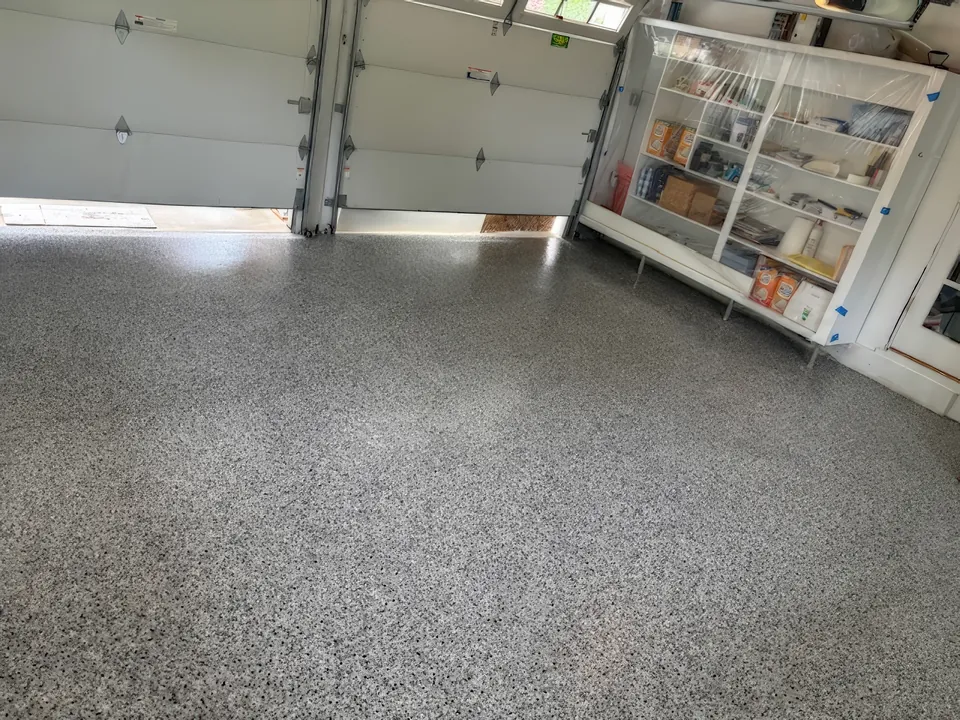
Most garage floors around here start the same way: dusty, stained, and pitting where the winter salt sat. I grind that concrete, fix the damage, and build a coating system on top that looks sharp and is easy to keep clean.
Every floor gets designed by hand. You pick the look, I lay it out for your space, and my crew and I install it start to finish. Want storage to go with it? I also install garage cabinets and slat walls.
- Diamond-ground prep, so the coating bonds to the concrete instead of sitting on top of it
- Cracks and pitted spots filled before the base coat goes down
- Flake broadcast for texture, grip and a finish that hides dust between cleanings
- Clear topcoat with an anti-slip additive available for wet winter months
What it fixes
Bare concrete soaks up oil, fluids and salt. Over time that turns into stains you cannot scrub out and a surface that keeps shedding dust onto everything you store. A coating seals the slab so spills sit on top and wipe up.
One of my customers put it simply in their review: their pitted concrete got a brand new life. That is the goal on every garage.
Epoxy or polyaspartic?
Both make a tough floor. The difference is speed and sunlight. Polyaspartic cures in about 24 hours compared to about 48 for epoxy, and it is UV stable, so it holds its color when the garage door is open to the afternoon sun. I will walk you through which system fits your garage, how you use it, and your timeline when I give you the estimate.
Old coatings and DIY kits
Some garages already have something on the floor: a DIY kit that is peeling, or an older floor system at the end of its life. That comes off first, so the new coating bonds to clean concrete. One garage took more than 20 hours of scraping and grinding to get an old stone floor system off before the new flake floor went down.
Popular Finishes For Garage Floor Coatings
Garage Floor Coatings Questions
How long until I can park in my garage again?
You can usually walk on a polyaspartic floor the next day. Vehicles need more cure time, and that depends on the system and the temperature. I give you the exact date before we start so you can plan around it.
Can you coat a garage floor that is cracked or pitted?
Yes. Prep includes grinding the slab and filling cracks and pits so the finished floor is smooth and even. Badly damaged concrete may need extra repair, and I will tell you that up front during the estimate.
Will a coated garage floor be slippery?
Flake adds texture, and I can add an anti-slip additive to the topcoat. Any smooth floor gets slick with standing water or snowmelt, so the additive is worth it in a garage that sees winter driving.
Which flake colors can I choose from?
Take a look at my color samples page. If you do not see a blend you like, let me know and I will get it for you.
How long does a garage floor take?
Many garages are done in as little as two days. Floors that need a lot of repair, or have an old coating to remove first, take longer. You get the schedule before we start.
Can you coat a garage in the winter?
Unheated garages get done in the warmer months, and that part of my schedule usually wraps up in late October or early November. Heated garages and basements can be done through the colder months.
You Might Also Need
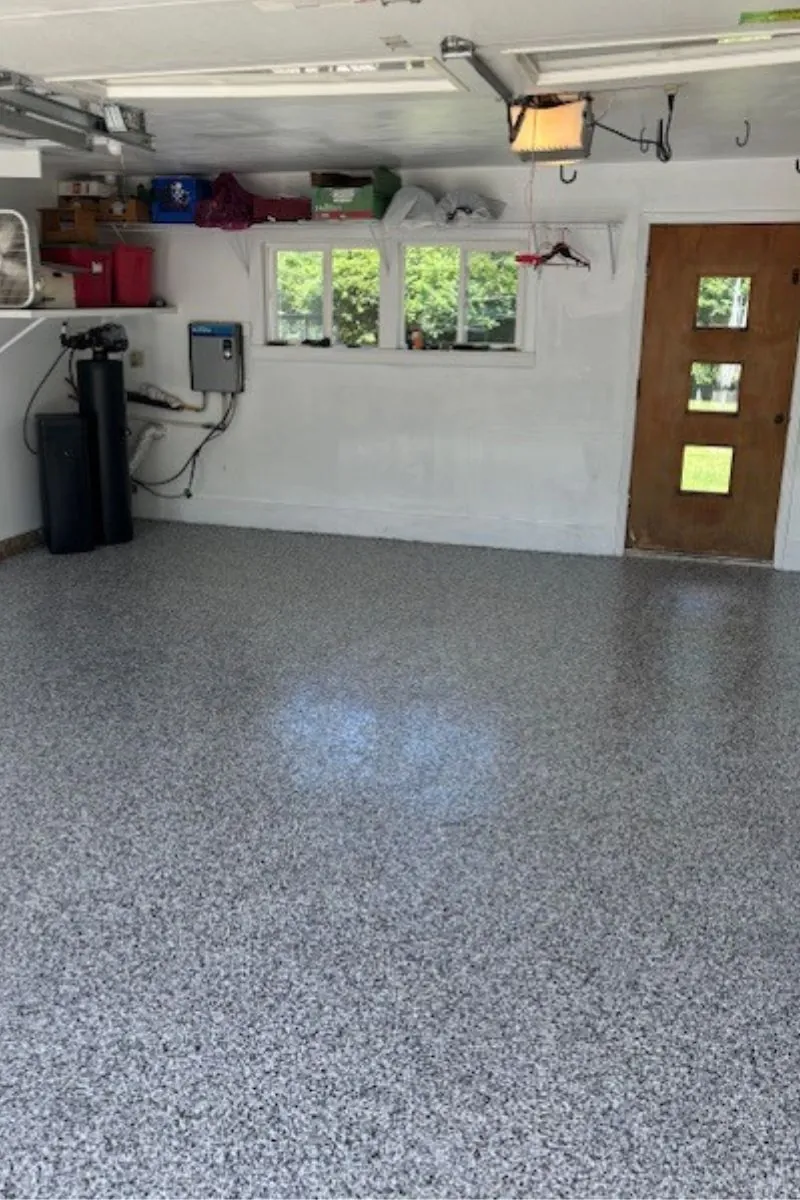
Garage Cabinets & Slat Walls
Garage cabinets and slat walls that get tools, totes and gear up off a freshly coated floor.
Learn more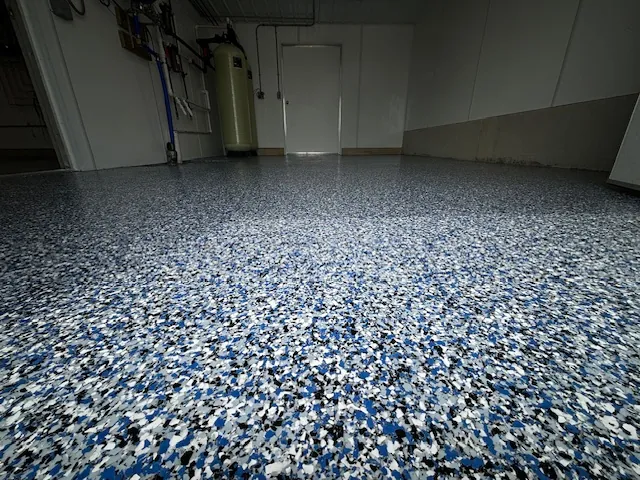
Basement Floor Coatings
Bright, easy-clean basement floors for playrooms, laundry areas, gyms and storage.
Learn more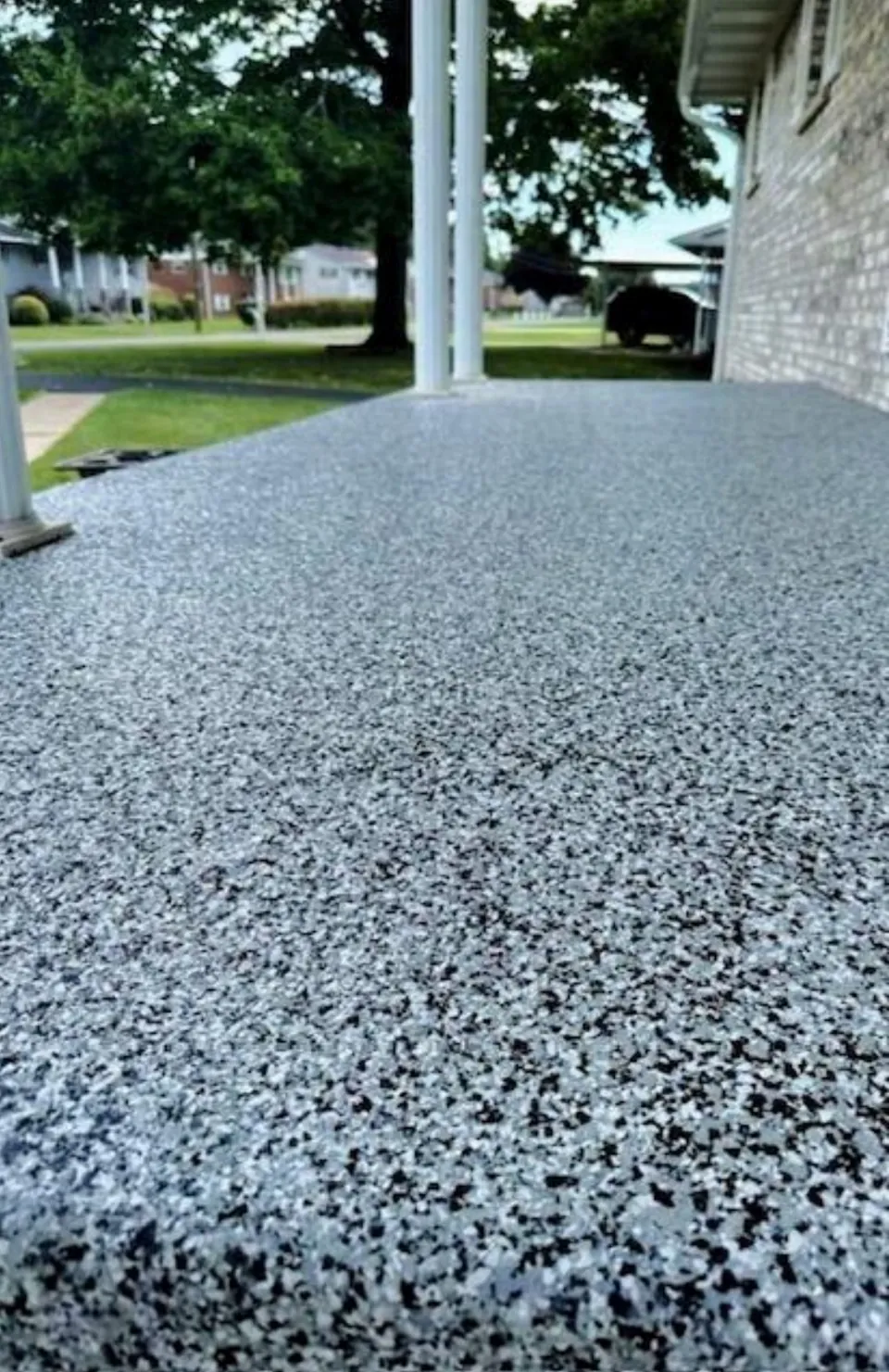
Porch & Patio Coatings
UV-stable flake coatings for porches, patios, steps and sidewalks that hold their color in the sun.
Learn more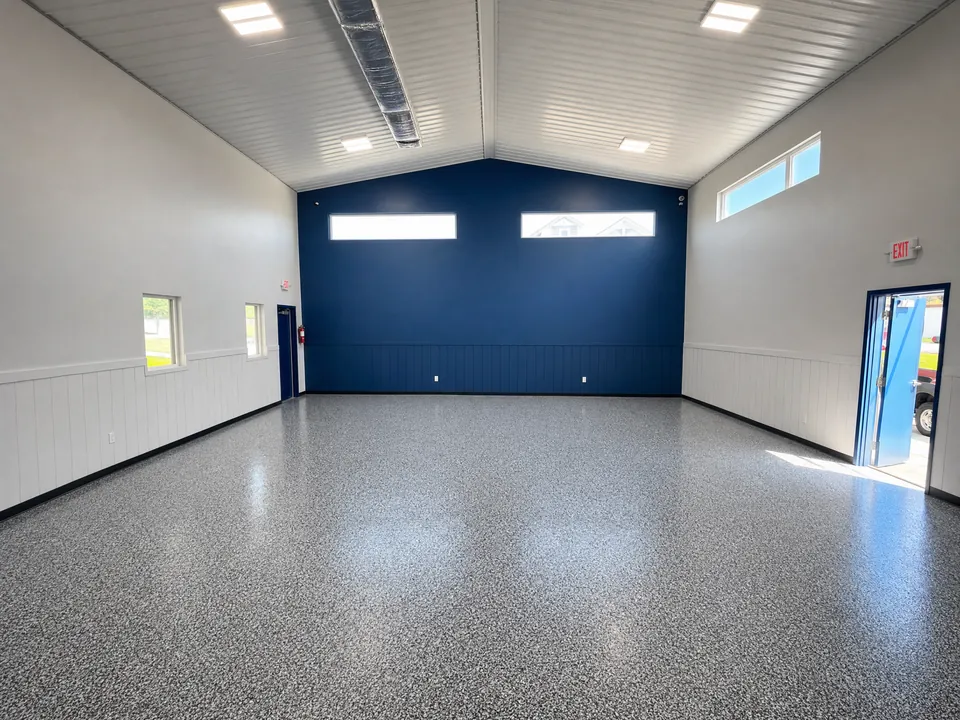
Shop & Pole Barn Floors
Tough coatings for shops, pole barns and farm buildings that see equipment, fluids and heavy use.
Learn moreNot sure where your town fits? See my service areas.
Let's Talk About Your Garage Floor Coatings
Send the form, call, or text a few photos. I serve Union City and about 50 miles around, in Ohio and Indiana.
Request Your Free Estimate
Tell me about your project and I will get back to you quickly.
Prefer to talk? Call or text (937) 714-7346. From concept to completion, I have you covered.